Dao
Interview with director Alain Gomis, who, with Dao, blurs the line between reality and fiction to tell the story of Gloria and her daughter through a stream of images set between France and Guinea-Bissau
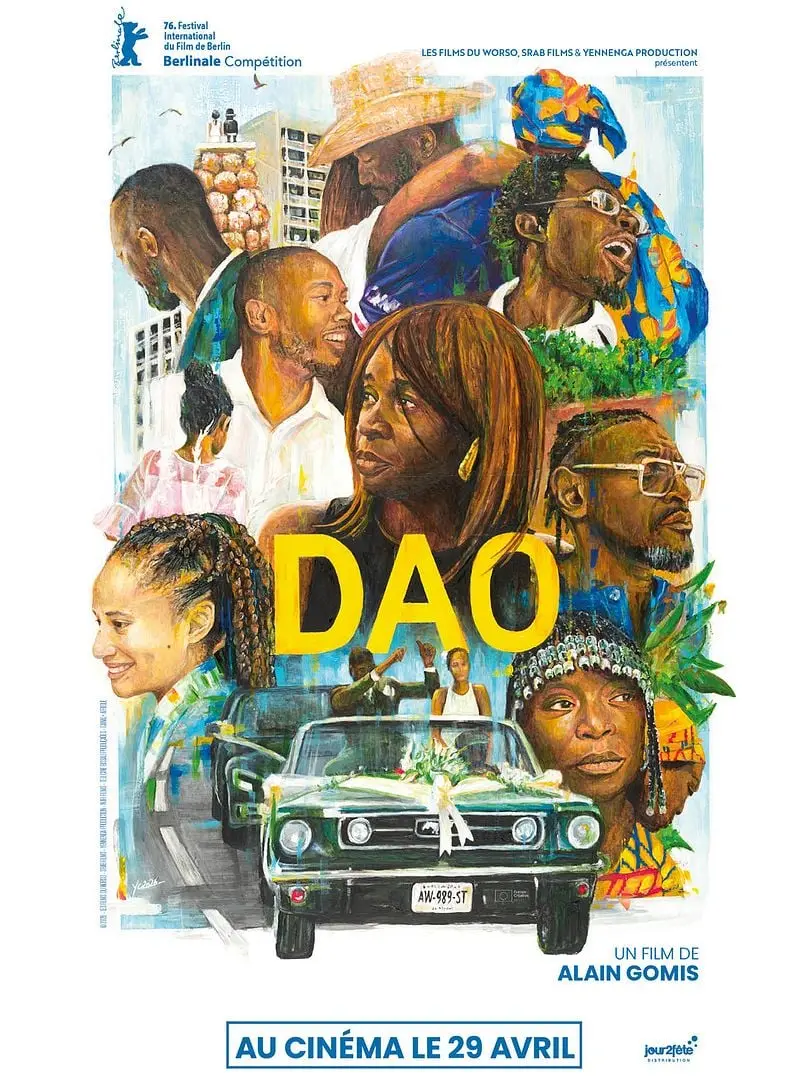
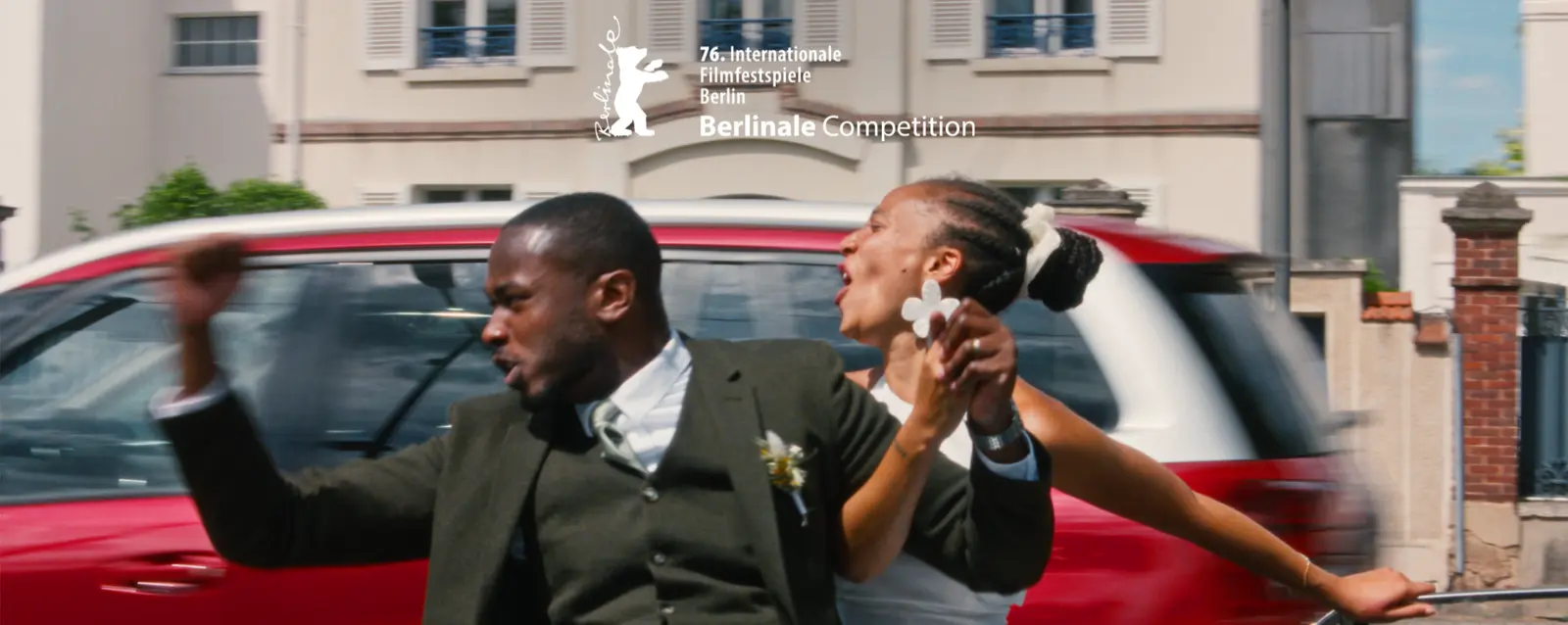
Built upon the blurred boundary between reality and fiction, Dao draws us into Gloria’s life, immersing us in a flow where the funeral ceremony in Guinea-Bissau in honour of her father intertwines seamlessly with her daughter’s wedding in France. A film that seeks to fill the gap in the representation of a generation of Africans who are claiming the right to tell their own stories through their own narratives. An act of restitution that is, above all, an immersive cinematic experience, bucking the trend towards an increasingly standardised cinema.
You presented Dao at the Berlin Film Festival last February, during an edition marked by Wim Wenders’ statements on cinema and politics. Do you make political films?
Cinema is inevitably political; I don’t know how one could make a film that isn’t. The way a story is told, the way a character is introduced, is in itself a matter of hierarchies. It’s not because some people are in the resistance that they’re more political than those who assert dominance.
At the heart of Dao is a mother-daughter pair around whom the extended family and friends revolve. It’s an epic film that immerses the viewer in a complex universe touching on themes such as immigration, ritual and family. How did you manage to organise this material?
It was both exciting and challenging. When I began working on the idea for the film, I realised almost immediately that I had two ceremonies in two different countries, involving three or four generations, men and women. First and foremost, I wanted to listen to them. And so began the process of creating a film open to the unexpected: whatever each person wanted to say or do. I knew that at the heart of it was the story of a mother and her daughter, but above all, Gloria’s story. When I have a central thread like this, I know I can weave elements around it in a play of rhythm and interweaving.
Gloria is wounded but strong. Did you have a particular woman in mind when you created her character?
I had several women in mind, but I really built the character together with Katy Correa, who plays her on screen. I understand my limitations – I’m a man – so I had to listen to her, because otherwise it would have been ridiculous. I imagined a structure, we discussed it and… we threw everything I’d written into the bin. That’s how it should be: you have to write a script and find the funding, but the film has to be made in the present.
Dao is an experimental film: it includes the casting process, shows what happens before filming begins and how you worked with the actors. It was a collective process that you built together with them, the crew and the students from the Centre Yennenga (a cultural institute dedicated to cinema founded in Dakar by Gomis in 2018, ed.), who edited the film alongside you. How do you reconcile a collective process with the presence of a director?
By listening. For example, I really enjoyed hearing the students’ perspectives; they were much younger than me and therefore had different insights. Today, I think I appreciate making a film with others more than making one entirely on my own. I find that the film is better when it’s a collective effort.
Do you think this could be a way to make more independent films?
Yes, this is my sixth film, so I have greater creative freedom than when I shot my first feature. I can approach it with a more open script. I’m also more familiar with the set. This experience allows me to break some production conventions (such as saying ‘silence, camera, action’, for example). And it is precisely these production conventions that often shape the film, pushing the actors to do exactly what they usually do. You have to break the production mould in order to establish a new dynamic that leads to different results, even if it’s difficult. You can’t have the freedom you want unless you change the way you work.
Filming in Africa is very different from filming in Europe – I’m thinking of the rules, the permits…
You have to know your environment. When we filmed in France, we were free. But we shot everything in the same place, in a space we knew well and where we could improvise. Cinema is, above all, about knowing how to adapt to the conditions at hand, and the better we know them, the more we’re able to transform them into something else. But the thing is, we have to adapt constantly. I’m sure that today, if I want to film on the streets here in Milan, it’s possible. But under certain conditions. I won’t be able to film for three hours. I know I’ll have 10 minutes for the shot I need to get. We’ll do a long take, go to a location, and film it with a small camera – something fairly discreet.
I get the impression that sometimes festivals expect a certain type of film from African or Asian directors. Have you ever felt pressured to make a certain kind of film, or have you always been free?
Freedom doesn’t exist in and of itself; it has to be earned. When you’re seeking funding, for example, they’ll tell you they’re interested but on certain conditions; you have to accept that you won’t have funding that influences you too much. The same applies during the editing process: there were many discussions about the film’s running time, but what matters isn’t so much my freedom as that of the audience.
When people who’ve seen the film tell me they recognised themselves in it, that they cried or laughed, I have proof that what we think of as popular cinema is often the sort that has lost its flavour. It worries me when the film is presented in a complex way; it’s true there are many elements, but we’ve all tried to make a straightforward film, for the people. It’s not an exercise in style; it was about telling a story that has its own precise form and that moves you because it’s unlike anything else. It’s not mere experimentation.
In which countries will the film be released?
In France. In Senegal we’re discussing it, but it should be soon; in Guinea-Bissau we’ll only be holding a few screenings because the situation is complicated. In Italy, it’s difficult to get into cinemas. Félicité (2017) was only in cinemas for a short while. I think it’ll be difficult for Dao, which is three hours long. I’m still hopeful, because, surprisingly, the film is doing well, even in countries where my films have never been distributed. We’ll also be releasing it in the Ivory Coast and Togo.
What’s the state of the film industry in Senegal?
It’s hard to pin down, because there are positive aspects – such as a film fund and the reopening of some cinemas – and there are negative aspects. The fund isn’t actually consistent, and it’s difficult to get a production off the ground when you don’t know when you’ll be able to apply for funding. Young people continue to face difficulties.
But making films that are in tune with the economic context is also stimulating. Otherwise, you’d stop making them because there’s no money. There’s no money, so your film will be dictated by whoever provides it. It’s a major issue: how to build a local film industry. You can’t make films that are only meant for foreign markets; that would be schizophrenic.
Now is the time for change. At the Yennenga Centre, for our part, there’s a great deal of excitement. We also handle post-production to ensure that films can be made entirely here, at a lower cost. Because if I do post-production in Italy or Canada, the film will cost a lot; I wouldn’t be able to make it profitable or appeal to the audience I’m targeting. So today it’s essential to find a self-sustaining film industry, in Senegal and in other countries.